Quick answer
Construction subcontractors most often need fast funding for materials and labour before the first progress payment, plant hire, a gap while builders pay late or retentions held for months. Short unsecured loans repaid from progress claims suit smaller needs, with same-day funding possible once the file is complete. Property-secured loans suit larger jobs, and a line of credit suits recurring gaps.
Key points
- Costs come before progress payments on almost every job.
- A signed contract and payment schedule are your best documents.
- Property suits larger jobs and tight deadlines.
- Same-day funding possible for smaller amounts once the file is complete.
- Common needs
- Materials, plant hire, wages, late payments
- Typical route
- Short unsecured, property-secured or credit line
- Key documents
- Contract, payment schedule, progress claims
- Watch for
- Builder insolvency risk
Construction has the toughest cash flow of almost any industry. Subcontractors buy materials, hire plant and pay crews before the first progress claim is approved, then wait for the builder to pay, then wait again for retentions. Add a builder who pays late, and a profitable job can leave the business short for months.
Fast funding is a normal part of how many subcontractors keep jobs moving. The skill is in matching it to the contract.
The usual construction needs
| What happened | Usually the quickest fix |
|---|---|
| Materials needed before the first claim | Short loan repaid from the progress payment |
| Plant hire or equipment for a new job | Short loan, or equipment finance if buying |
| Builder paying claims late | Line of credit or cash flow loan |
| Retentions held after completion | Line of credit |
| Large new contract, tight start | Property-secured loan |
| Wages for a bigger crew | Short cash flow loan |
The contract is your best document
A signed contract, a payment schedule and approved progress claims show a lender exactly where repayment will come from. Combined with linked bank statements, they can unlock larger amounts and give lenders confidence about timing. Have them ready on the first call. If you’re quoting a big job, think about funding before you sign, so the start date doesn’t catch you out.
Matching repayments to progress claims
The cleanest construction loans are repaid from the claims they fund. If materials for stage one cost $60,000 and the stage one claim is due 45 days after completion, a short loan that ends shortly after that payment fits. Build in a buffer, because claim approvals and payments often slip.
When the builder pays late
Late payment is endemic in construction. If it’s a one-off, a short cash flow loan sized to the gap works. If it’s constant, a line of credit costs less over time. Know your rights too: each state has security of payment legislation that sets out payment claim processes and timeframes for construction work. Using it properly can shorten the wait. See customer paying late.
The builder insolvency risk
Builders do fail, and subcontractors are often left unpaid. Before borrowing heavily against one builder’s payments, check their track record, how long they’ve traded and whether other subbies have had problems. Don’t put all your cash flow, and all your borrowing, on a single builder if you can avoid it.
Larger jobs and property
For bigger contracts, unsecured limits may fall short. A property-secured loan can carry more: $20k to $250k is possible same day once title, value and signers are sorted, and up to $5m possible within 24–48 hours. Keep the term matched to the contract and the exit tied to specific claims.
An illustrative example
A Sunshine Coast concreting business wins a $420,000 subcontract on a new medical centre. Formwork, steel and concrete for the first pours cost $130,000, and the first claim won’t be paid for about seven weeks. The business has traded nine years and the directors own their home. A property-secured loan for $140,000, repaid from the first two progress claims, funds the materials within two days. The owners also keep a smaller line of credit for the retention period at the end. Illustrative only.
Plant: hire or buy?
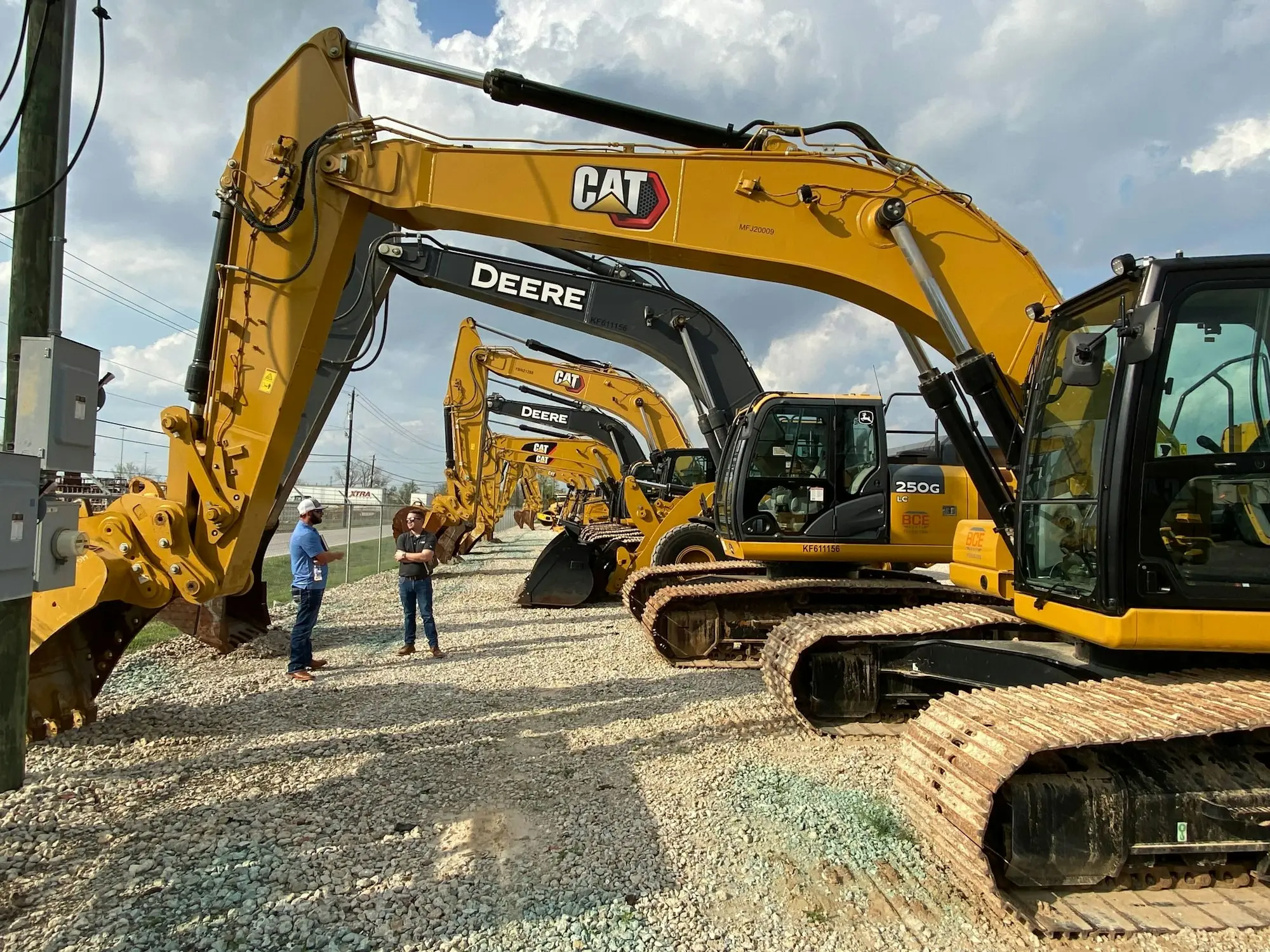
If a job needs an excavator, a scissor lift or a concrete pump you won’t use again soon, hire is often cheaper and avoids a loan altogether. If you’ll keep using it, finance it against the machine over its working life rather than with a short loan. Mixing the two, a short loan for a long-life machine, is one of the most common cash flow mistakes in construction.
Keep the ATO on side
Construction businesses with fluctuating income often fall behind on BAS in a lean quarter, especially when a builder pays late. Lodge on time even if you can’t pay it all, and set up a payment plan if needed. Lenders will ask about your tax position early, and a lodged BAS with a plan reads far better than an unknown. A separate account for GST, topped up from every progress payment, prevents most of the problem.
What to have ready
- The signed contract and payment schedule.
- Approved progress claims or the latest payment certificate.
- Supplier quotes for materials or plant.
- Online banking ready to link.
- Photo ID for every director; property details if relevant.
- Latest BAS and ATO portal statement.
Keep the job moving
Tell us about the contract, what you need to fund and when the claims are due. Asking doesn’t touch your credit file, your details aren’t sent to a dozen lenders, and one real person reads it and calls you. Send the contract and accurate numbers and we’ll structure funding around your claims. Start your enquiry here.
Frequently asked questions
Can I borrow against a progress claim?
An approved progress claim supports an application by showing where repayment comes from. Some lenders offer specific claim or invoice finance; others use it as evidence for a short loan.
What about retention money?
Retentions can tie up cash for months after a job. A line of credit can bridge it, but don't count retentions as certain until they're released.
What if the builder goes broke?
It's a real risk in construction. Check the builder's history, know your security of payment rights in your state and avoid over-borrowing against one builder's payments.
Should I hire or buy plant for a job?
If you'll only need it for this job, hire is often cheaper. If you'll use it for years, finance secured on the machine usually beats a short loan.